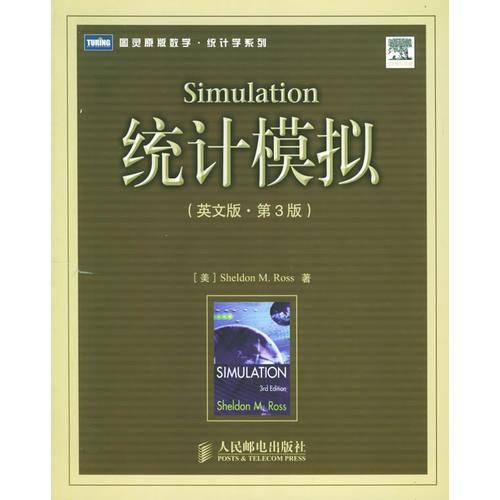
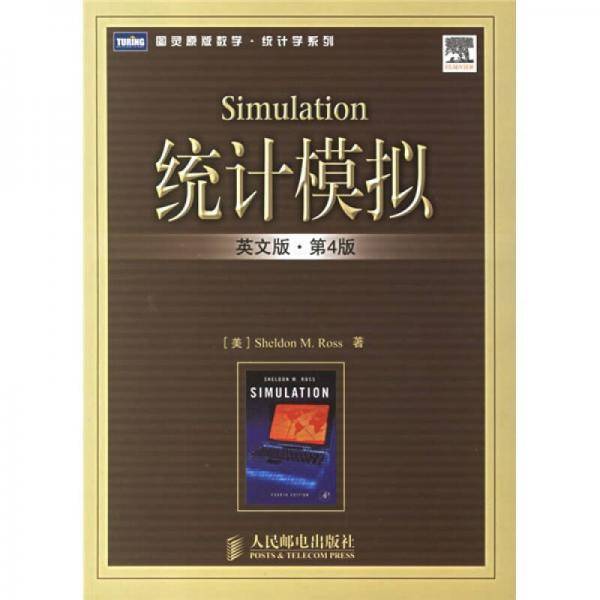
“……本书内容丰富,不论作为教材还是参考书都非常值得推荐。”——美国统计学报 “本书是一本非常优秀的教材,强调了计算机在模拟技术上的应用。一定的概率和统计知识将有助于理解本书的精髓。”——亚马逊网上书店评论 统计模拟是一门新兴的统计学和计算机结合的学科,因其便利性和经济性而广泛应用于统计学、数学、精算科学、工程学、物理学等众多领域,用以获得精确而有效的解决方案。 本书是国际知名统计学家SheldonM.Ross所著的经典教材,已被加州大学伯克利分校、哥伦比亚大学等多所名校采用。书中涵盖了统计模拟最新方法和技术,提供了丰富的实例,备受业界推崇。 本书特色: 提供了分析模拟数据以及模拟模型的拟合检验所需的统计方法。 通过许多实用的例子(如多服务器排队法、存货控制及行使股票期权等)来阐明和提出理论。 强调方差缩减技术,包括控制变量及它们在因归分析中的应用等。 提供了有关保险风险模型、生成随机向量、奇异期权的材料和关于产生离散随机变量混淆方法的独特材料。 第4版特别增加了随机序列函数和随机子集函数的评估、分层抽样法的应用。 本书介绍了统计模拟的一些实用方法和技术。在对概率的基本知识进行了简单的回顾这后,介绍了如何利用计算机产生随机数以及如何利用这些随机数产生任意分布的随机变量、随机过程等。然后介绍一些分析编译数据的方法和技术,如Bootstrap、方差缩减技术等。接着介绍了如何利用统计模拟来判断所选的随机模型是否拟合实际的数据。最后介绍了MCMC及一些最新发展的统计模拟技术和论题。本书可作为统计学、计算数学、保险学、精算学等专业本科生教材,也可供相关专业人士参考。本书为英文第4版。 Sheldon,M.Ross,国际知名概率与统计学家,南加州大学工业工程民运筹系系主任。毕业于斯坦福大学统计学,曾在加州大学伯克利分校任教多年。研究领域包括:随机模型、仿真模拟、统计分析、金融数等。Ross教授著述颇丰,他的多种畅销数学和统计教材均产生了世界性的影响,如IntroductiontoProbabilityModels(《应用随机过程:概率模型导论》),AFisrtCourseinProbability(《概率论基础教程》)等(均由人民邮电出版社出版)。 1IntroductionExercises2ElementsofProbability2.1SampleSpaceandEvents2.2AxiomsofProbability2.3ConditionalProbabilityandIndependence2.4RandomVariables2.5Expectation2.6Variance2.7ChebyshevsInequalityandtheLawsofLargeNumbers2.8SomeDiscreteRandomVariablesBinomialRandomVariablesPoissonRandomVariablesGeometricRandomVariablesTheNegativeBinomialRandomVariableHypergeometricRandomVariables2.9ContinuousRandomVariablesUniformlyDistributedRandomVariablesNormalRandomVariablesExponentialRandomVariablesThePoissonProcessandGammaRandomVariablesTheNonhomogeneousPoissonProcess2.10ConditionalExpectationandConditionalVarianceExercisesReferences3RandomNumbersIntroduction3.1PseudorandomNumberGeneration3.2UsingRandomNumberstoEvaluateIntegralsExercisesReferences4GeneratingDiscreteRandomVariables4.1TheInverseTransformMethod4.2GeneratingaPoissonRandomVariable4.3GeneratingBinomialRandomVariables4.4TheAcceptance-RejectionTechnique4.5TheCompositionApproach4.6GeneratingRandomVectorsExercises5GeneratingContinuousRandomVariablesIntroduction5.1TheInverseTransformAlgorithm5.2TheRejectionMethod5.3ThePolarMethodforGeneratingNormalRandomVariables5.4GeneratingaPoissonProcess5.5GeneratingaNonhomogeneousPoissonProcessExercisesReferences6TheDiscreteEventSimulationApproachIntroduction6.1SimulationviaDiscreteEvents6.2ASingle-ServerQueueingSystem6.3AQueueingSystemwithTwoServersinSeries6.4AQueueingSystemwithTwoParallelServers6.5AnInventoryModel6.6AnInsuranceRiskModel6.7ARepairProblem6.8ExercisingaStockOption6.9VerificationoftheSimulationModelExercisesReferences7StatisticalAnalysisofSimulatedDataIntroduction7.1TheSampleMeanandSampleVariance7.2IntervalEstimatesofaPopulationMean7.3TheBootstrappingTechniqueforEstimatingMeanSquareErrorsExercisesReferences8VarianceReductionTechniquesIntroduction8.1TheUseofAntitheticVariables8.2TheUseofControlVariates8.3VarianceReductionbyConditioningEstimatingtheExpectedNumberofRenewalsbyTimet8.4StratifiedSampling8.5ImportanceSampling8.6UsingCommonRandomNumbers8.7Evalu
阅读更多